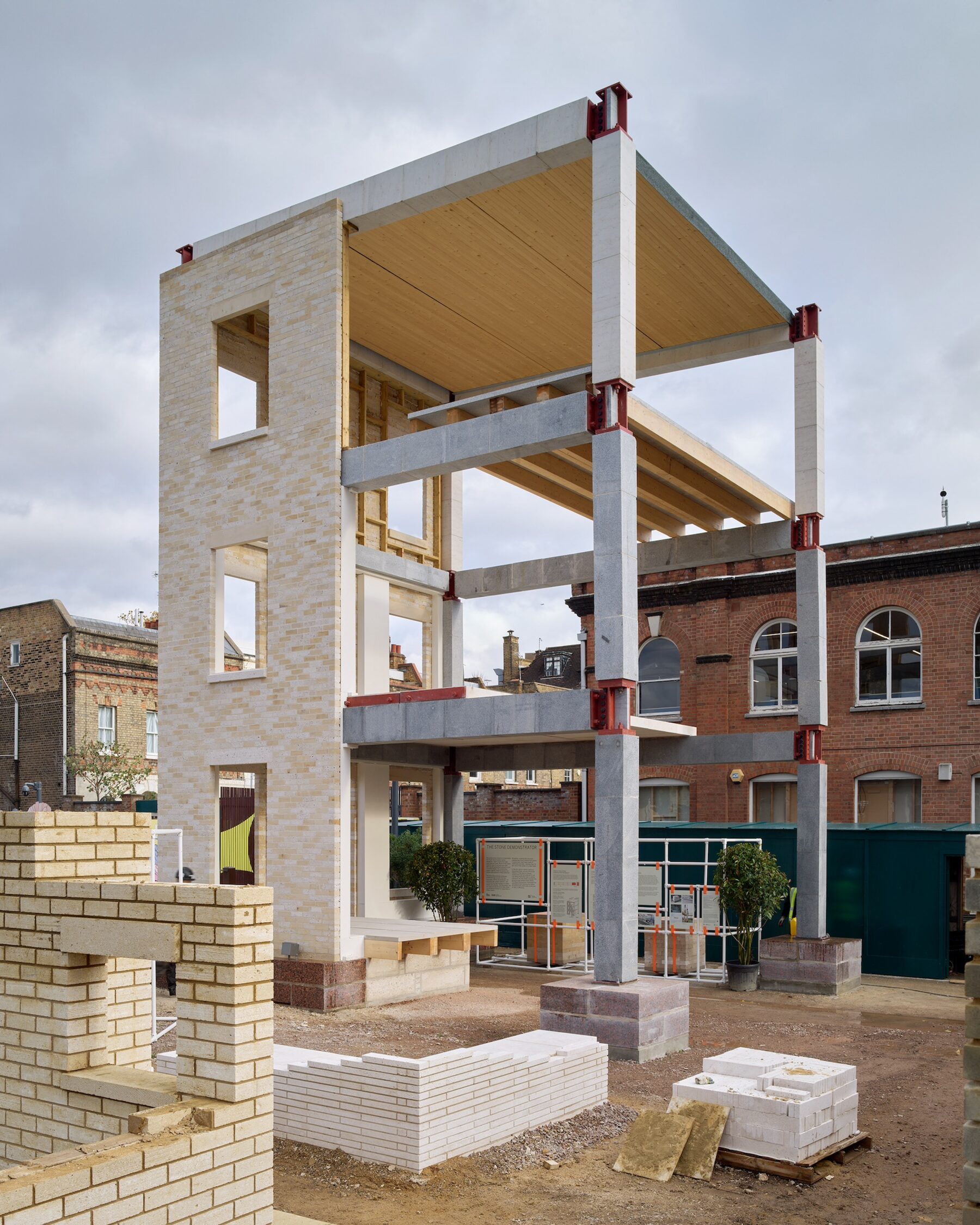
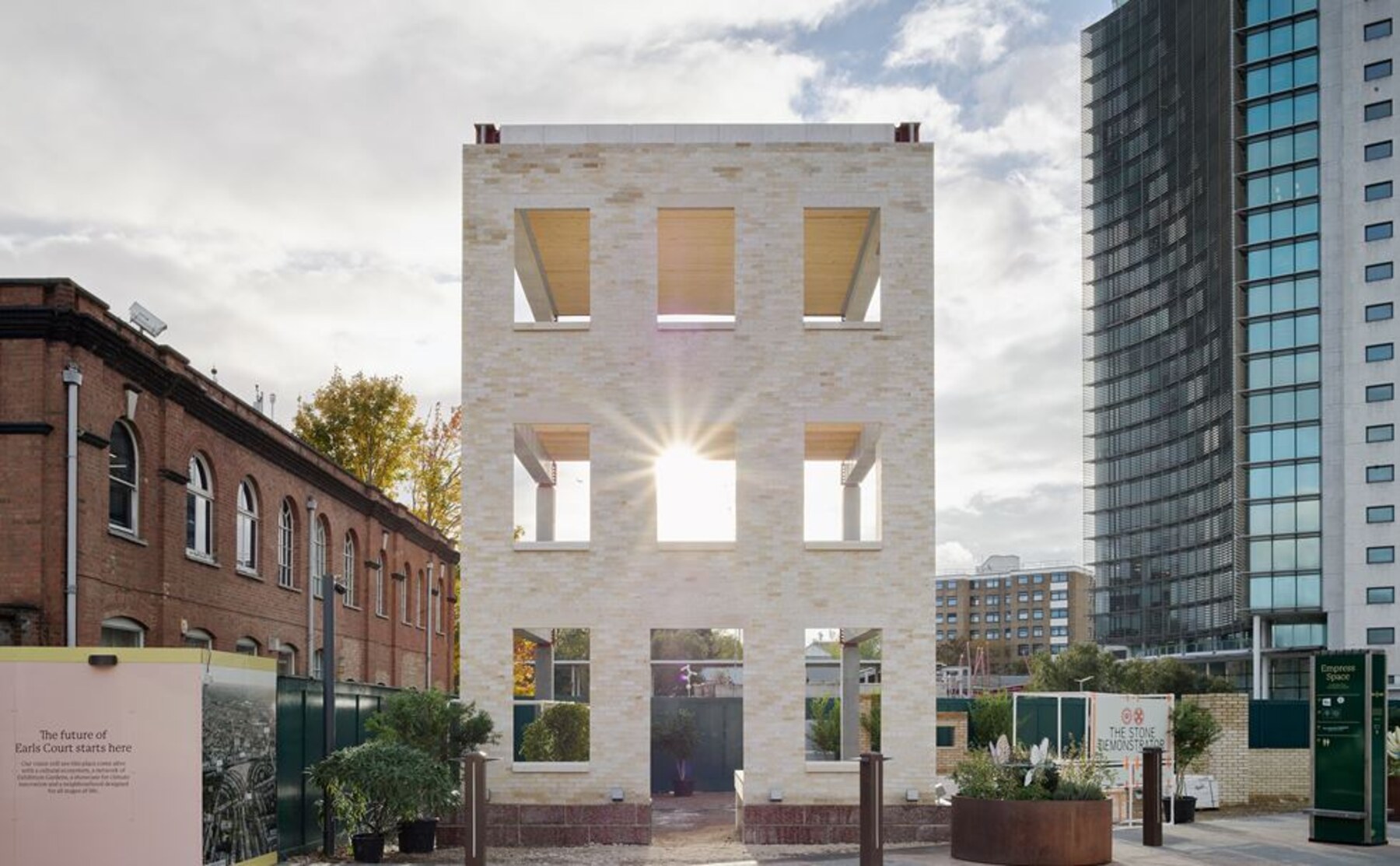
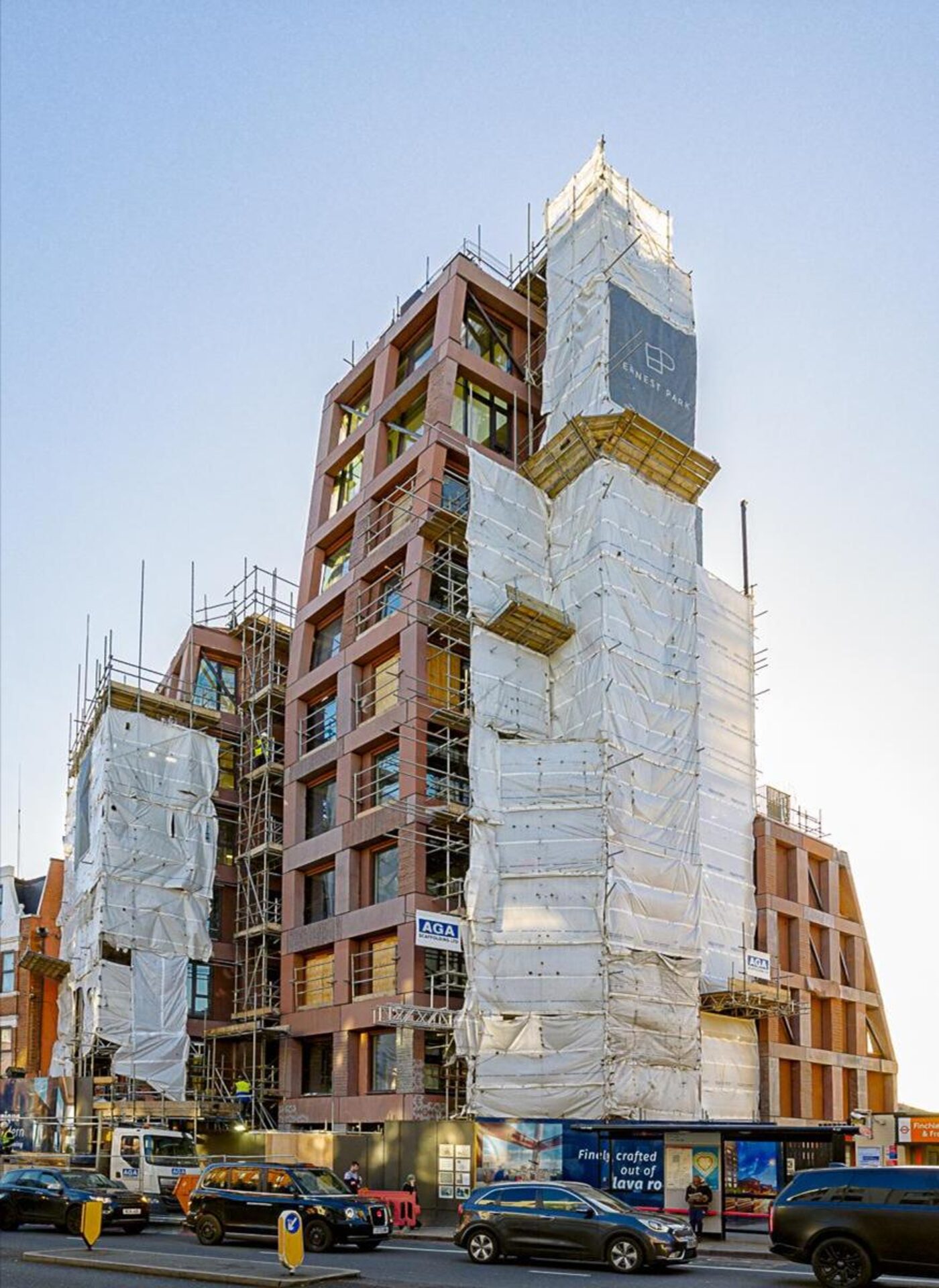
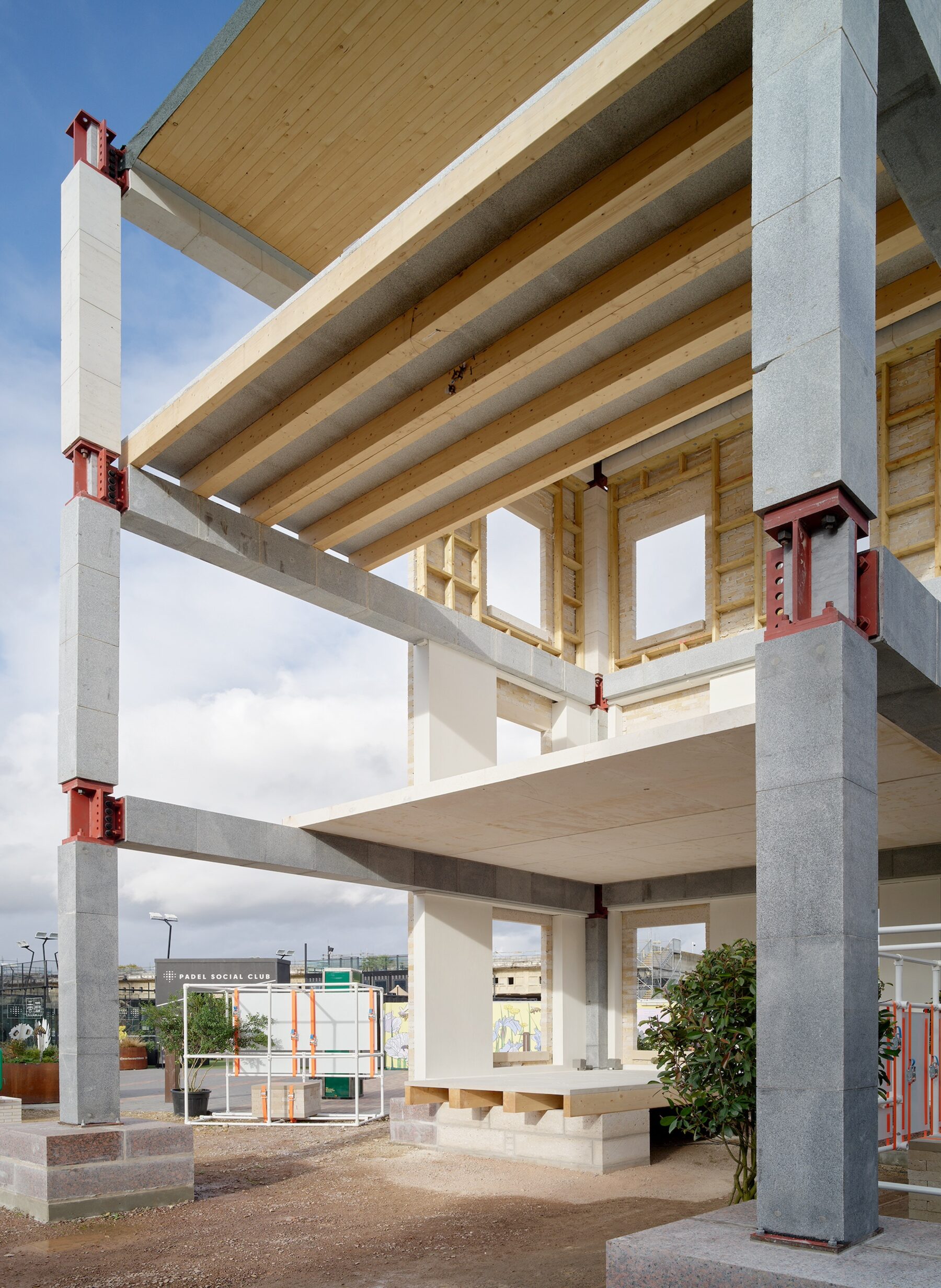
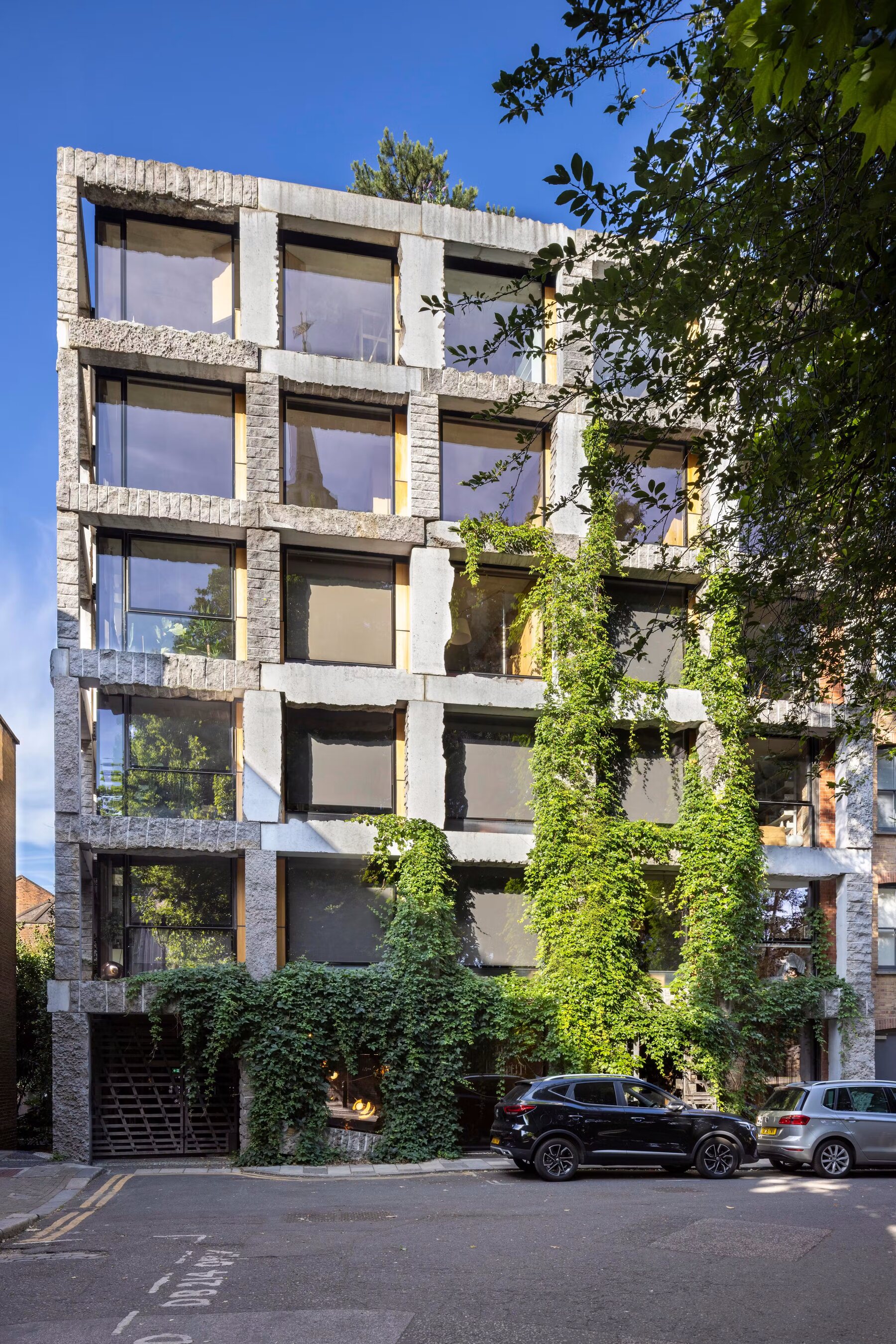
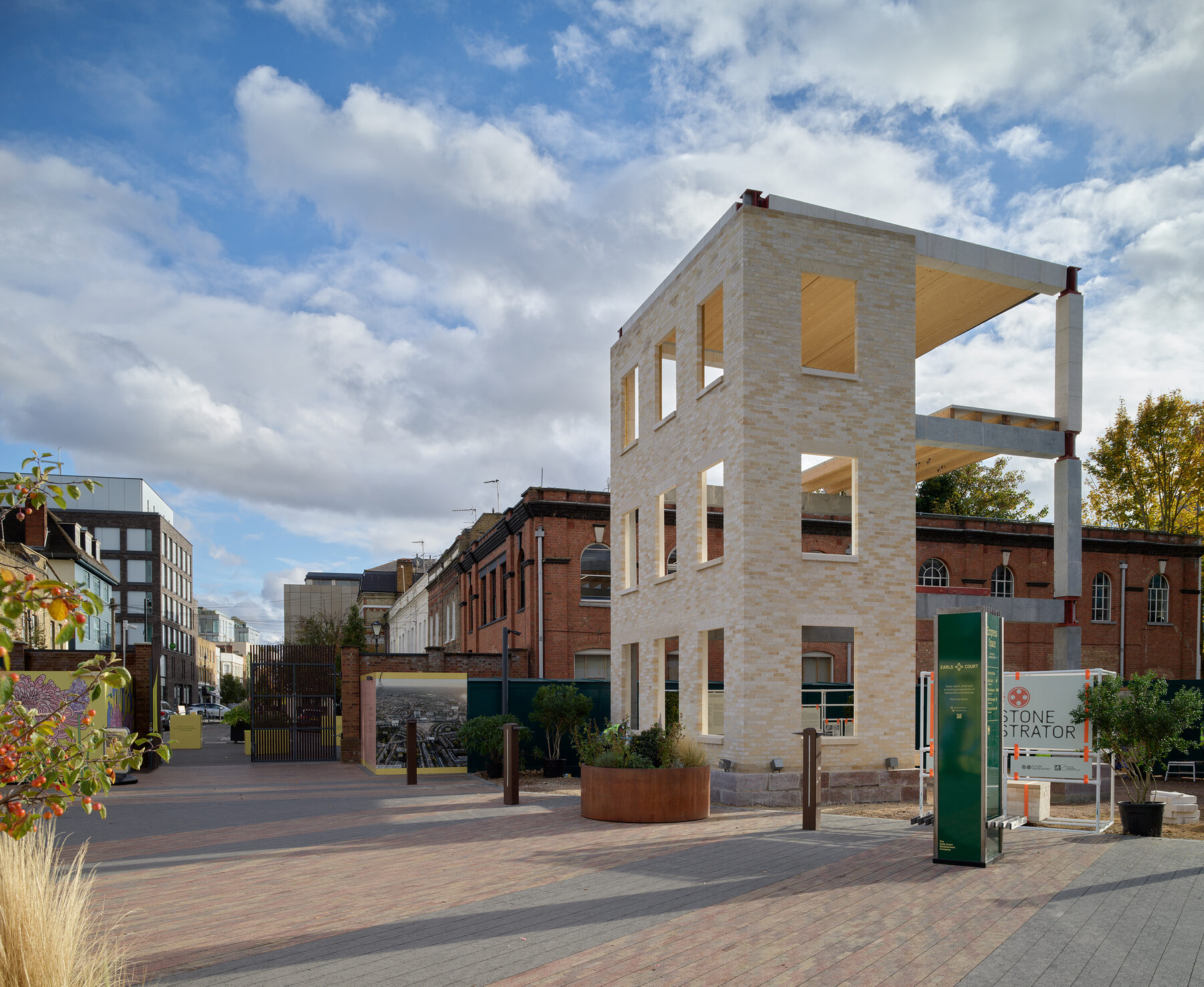
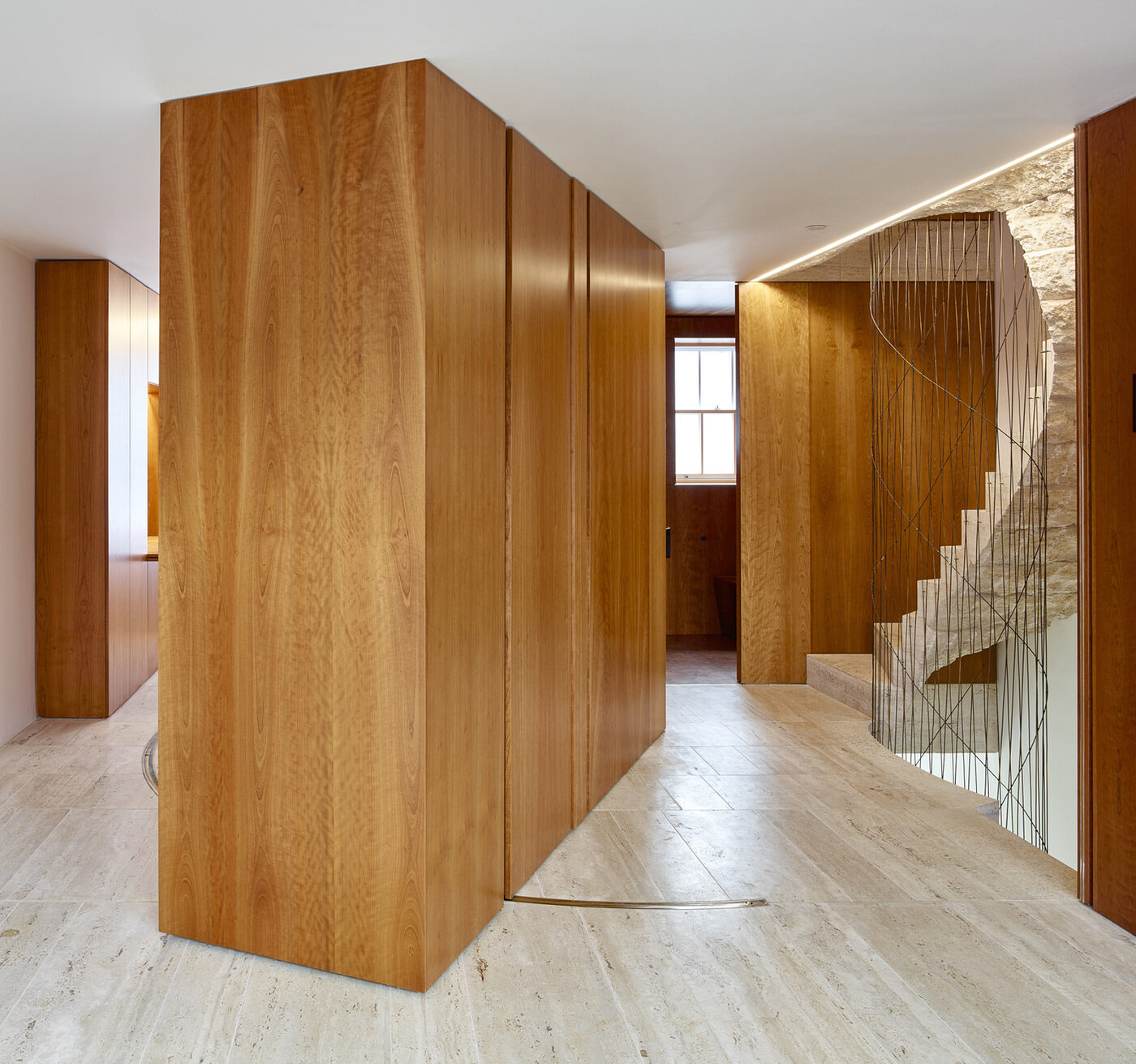
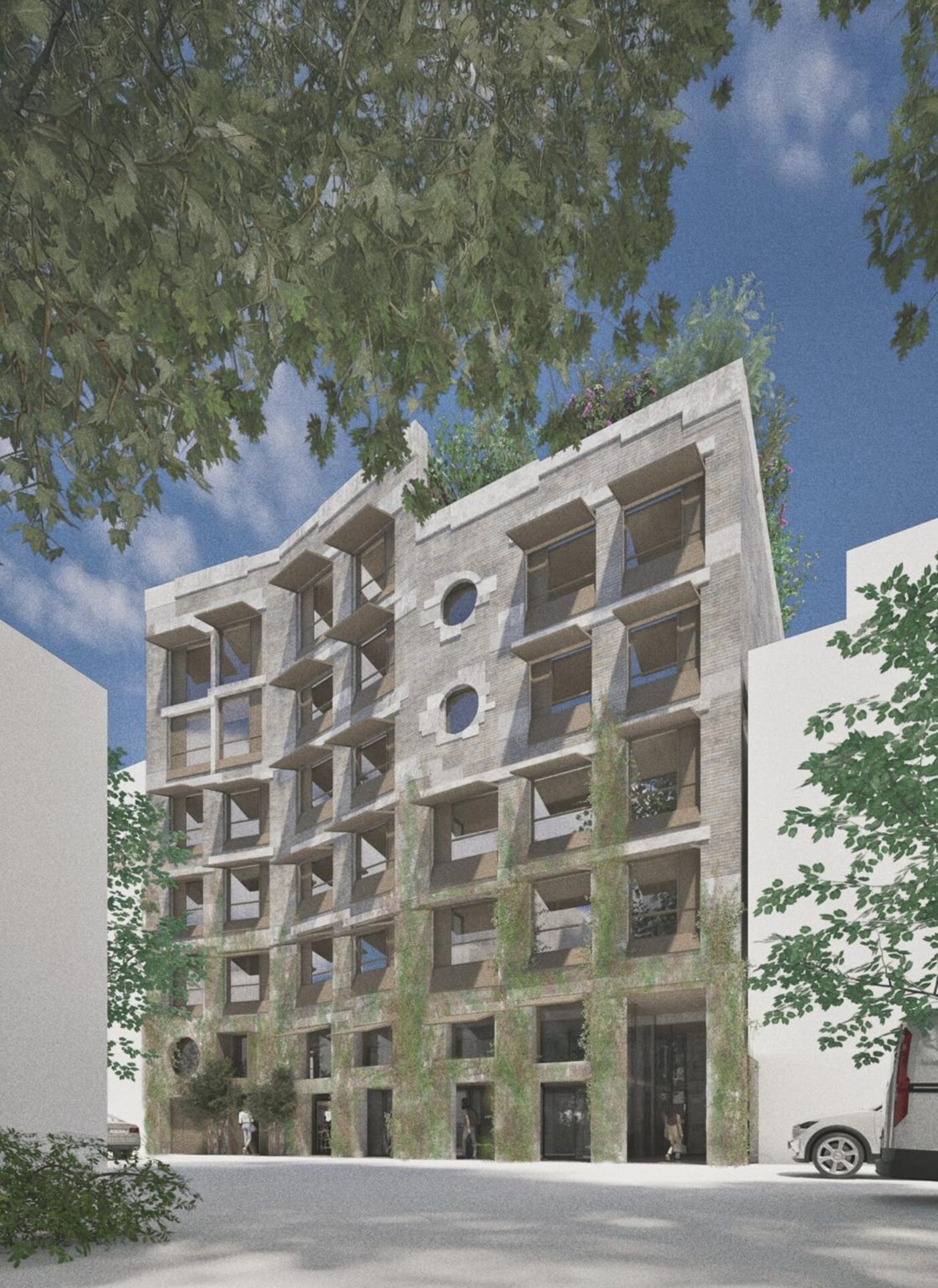
Structural stone and timber in practice — the Stone Demonstrator at Earls Court, 317 Finchley Road, 15 Clerkenwell Close, Caroline Place and 16 Orsman Road.
Our Approach
Stone and timber replace concrete, steel and fired-clay brick as the primary structure. No formwork. No curing time. No wet trades. The result is a building that costs less, goes up faster, and sells for more.
Structural limestone and granite carry the frame. Stone bricks replace fired-clay bricks. Sourced directly from a network of six quarries, stone costs less per tonne than the equivalent structural concrete — and delivers a façade that needs no cladding, no render and little to no maintenance.
CLT and DLT replace internal concrete floors and walls. They are lighter, faster to install, thermally superior and offer an attractive finish. Counting biogenic sequestration, every floor installed removes carbon from the atmosphere rather than adding to it.
Materials bought direct from quarries and manufacturers, bypassing commodity markets and contractor markups. Dry assembly removes wet-trade subcontractors. Construction costs are up to 25% less than conventional building.
No drying times between trades and no sequential dependencies. Programmes are typically 20–30% shorter than conventional construction — and since finance costs compound daily, faster delivery directly improves returns.
Fewer trades to coordinate and no general contractor layer. The supply chain is locked in before the contract is signed, with specific stone suppliers named — leaving no mechanism for cost escalation once procurement is complete.
Embodied carbon reporting is moving from voluntary to mandatory. SCALE schemes are already certified carbon negative under EN 15978 — a planning advantage today, access to green finance at preferential rates, and no stranded-asset risk tomorrow.
Buyers pay demonstrably more for exposed stone and timber than for rendered blockwork and plasterboard. Every completed SCALE scheme has sold above the surrounding market — at a premium of up to 10% over local rates.
See the Projects